
Not Just A Holiday: How India And Malaysia Are Becoming Each Other’s Gateway For many people, travelling means taking a break from routine. A change of scenery, a few photographs, good food and perhaps a little shopping before returning home.
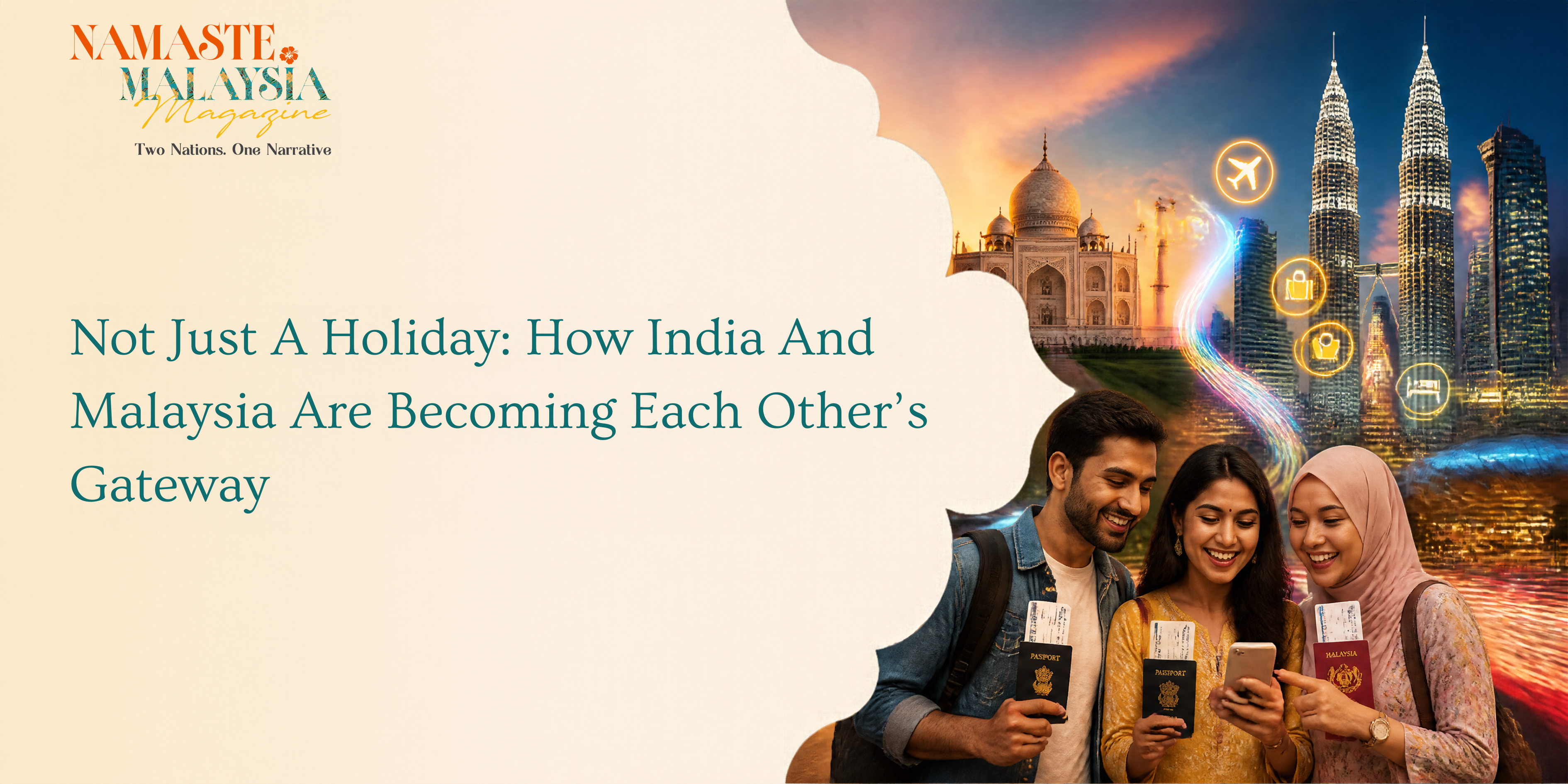
Two countries. Countless experiences. And opportunities that begin when people cross borders.
What if your next holiday could lead to a business opportunity? What if a family trip introduced you to a new culture, a new friendship or even a new way of looking at the world?
For many people, travelling means taking a break from routine. A change of scenery, a few photographs, good food and perhaps a little shopping before returning home.
But travel can be much more than that.
For Malaysians visiting India, and Indians discovering Malaysia, the journey can open doors to experiences that extend far beyond the usual tourist itinerary.
And increasingly, these two countries have good reasons to look at each other not just as holiday destinations, but as gateways to new possibilities.
The journey is gaining momentum
Let's begin with a number worth noticing.
Malaysia welcomed approximately 1.56 million visitors from India in 2025, representing growth of 14.6% compared with 2024. India has become one of Malaysia's important international visitor markets.
The momentum has continued into 2026. Tourism Malaysia reported more than 600,000 Indian visitors between January and May 2026, while its promotional efforts have expanded into additional Indian cities.
Air connectivity is also helping. More than 190 direct flights a week, with over 37,000 seats, have been reported between India and Malaysia.
These figures tell us something: the relationship between the two countries is not just being maintained through trade agreements and diplomatic visits. It is also being strengthened by ordinary people choosing to travel, explore and experience one another's countries.
And that is where the more interesting story begins.
For Indian travellers: Malaysia is more than Kuala Lumpur
Ask someone who has never visited Malaysia what they know about the country, and the answer may include the Petronas Twin Towers, shopping malls, delicious food and perhaps the famous Batu Caves.
All excellent reasons to visit.
But Malaysia has so much more to offer.
Penang is a destination where heritage, architecture, food and creativity come together. Its streets tell stories of generations of traders, communities and cultures. It is a wonderful place to discover the country's multicultural identity.
Langkawi offers island escapes, beautiful beaches and nature experiences. For visitors seeking relaxation, family holidays or a romantic getaway, it provides a very different pace from the city.
Sabah and Sarawak reveal another side of Malaysia, with rainforests, wildlife, indigenous cultures, adventure tourism and extraordinary natural landscapes.
Johor offers family attractions, resorts and easy access to Singapore, making it attractive for visitors who want to combine destinations.
And then there is Kuala Lumpur itself: a city where a visitor can enjoy modern shopping districts, traditional markets, historic neighbourhoods, temples, mosques and an extraordinary range of cuisines.
For Indian families, Malaysia can be particularly appealing because it offers a combination of comfort, accessibility, shopping, family attractions and familiar cultural connections, while still providing something different.
It is possible to feel at home and discover something new at the same time.
For Malaysians: India is a country of many worlds
Now let's turn the journey around.
India is often introduced to international visitors through the Taj Mahal, Delhi and Jaipur. These are iconic destinations, and rightly so.
But India is far too vast and diverse to be understood through just a handful of landmarks.
Consider Kerala, where tranquil backwaters, houseboats, spice plantations, wellness experiences and lush landscapes offer a completely different rhythm of travel.
Explore Rajasthan, and you encounter magnificent forts, palaces, colourful markets and centuries of royal history.
Visit Varanasi, and you experience a city where spirituality, rituals and everyday life meet along the River Ganges.
Travel to Meghalaya in Northeast India, and discover dramatic landscapes, waterfalls, living root bridges and communities with distinctive traditions.
Or head to Sikkim, where mountain scenery, monasteries and Himalayan culture offer a very different perspective of the country.
For Malaysian travellers, India can be a destination for adventure, spirituality, history, food, wellness, photography, shopping and personal discovery.
And perhaps the biggest surprise is that every region feels like a different journey.
One visit may leave you wanting to return for another.
When travel becomes business
Here is where the story becomes even more exciting.
Tourism is not simply about the number of people arriving at airports. Every visitor creates opportunities across an entire network of businesses.
Think about what happens when an Indian family plans a holiday in Malaysia.
They may book flights, hotels, transport, tours, restaurants, shopping experiences and family activities. They may arrange a wedding celebration, a corporate retreat or a special anniversary trip.
Behind that one holiday are travel agents, airline operators, hotel groups, restaurants, event planners, tour guides, retailers and many other service providers.
The same applies when Malaysians travel to India.
A growing tourism relationship can therefore create opportunities for businesses in both countries.
Some possibilities include:
- Travel and hospitality: Partnerships between travel agencies, hotels, resorts and destination management companies.
- Destination weddings: India and Malaysia have strong wedding traditions and considerable potential for celebrations that bring families and guests across borders.
- Medical and wellness tourism: Opportunities for carefully developed partnerships in healthcare, wellness retreats and related hospitality services.
- Education and student travel: Study tours, university visits, cultural exchanges and international learning experiences.
- Corporate travel and events: Conferences, exhibitions, incentive trips and business delegations.
- Food and cultural experiences: Culinary tours, festivals, heritage walks and community-based tourism.
The opportunity is not limited to large corporations. Smaller businesses, local operators and entrepreneurs can also participate.
A boutique hotel in Penang, a family-owned restaurant in Jaipur, a specialist tour operator in Kerala or a Malaysian event company could all benefit from stronger connections between the two markets.
Tourism, when developed thoughtfully, allows the benefits to reach beyond the airport and into local communities.
The power of familiarity
There is another reason why travel between India and Malaysia has such potential.
The two countries already share many cultural connections.
Malaysia has a significant Indian community, and Indian influences are visible in its food, language, festivals, arts and everyday life. For Indian visitors, some aspects of Malaysia may feel surprisingly familiar.
For Malaysians visiting India, there may also be moments of recognition: familiar flavours, shared traditions, religious heritage and cultural practices, although expressed in wonderfully different ways across India's many regions.
This familiarity can make the first journey easier.
But it is the differences that make the experience memorable.
A Malaysian visitor may discover a regional Indian dish they have never tasted before. An Indian family may experience the multicultural atmosphere of a Malaysian festival. A business traveller may find an unexpected opportunity through a conversation over dinner.
Sometimes, the most valuable part of a journey is not what was planned, but what was discovered along the way.
The next frontier: travelling with purpose
The future of tourism should not simply be measured by how many visitors arrive.
It should also be measured by the quality of the experience, the opportunities created for local communities and the relationships that continue long after the visitor has returned home.
Sustainable tourism, community-based experiences and responsible travel are becoming increasingly important.
Visitors are looking for more than photographs of famous attractions. They want authentic experiences. They want to meet local people, understand traditions, discover regional food, support small businesses and experience a destination in a meaningful way.
For India and Malaysia, this presents an opportunity to develop tourism that is not only commercially successful but also culturally enriching and socially beneficial.
Imagine a Malaysian student joining an educational exchange in India. An Indian entrepreneur attending a business conference in Kuala Lumpur. A Malaysian family discovering the villages and landscapes of Northeast India. An Indian wedding party celebrating in a Malaysian resort.
These are more than travel itineraries. They are opportunities to build lasting connections.
Two countries. Many reasons to make the journey.
India and Malaysia have spent decades building relationships through trade, investment, education and diplomacy.
Tourism adds another important dimension: people-to-people connections.
A country becomes more meaningful when we experience it ourselves. We understand its people a little better, appreciate its culture more deeply and begin to see opportunities that may not have been obvious from a distance.
Perhaps the next great business partnership will begin during a holiday. Perhaps a family trip will inspire a student to study abroad. Perhaps a visitor will return home with a new friendship, a new idea or a desire to explore more.
So, the next time you plan a holiday, consider looking beyond the familiar destinations.
India may have a corner you have never explored. Malaysia may have an experience you have yet to discover.
And who knows? Your next holiday may turn out to be much more than a holiday.
It may be the beginning of a connection that lasts a lifetime.
Let's talk about it
Note: If you could choose one destination in India or Malaysia to explore beyond the usual tourist attractions, where would you go — and what would you want to experience?
Share your choice. You might just inspire someone else's next journey.
Namaste Malaysia Magazine — connecting people, businesses and opportunities between Malaysia and India!