
The people who keep the city alive In Mumbai, a vegetable seller is arranging fresh produce before the first customers arrive. In Kuala Lumpur, a market trader is unloading crates of vegetables. A cleaner is sweeping yesterday's footsteps from the streets.
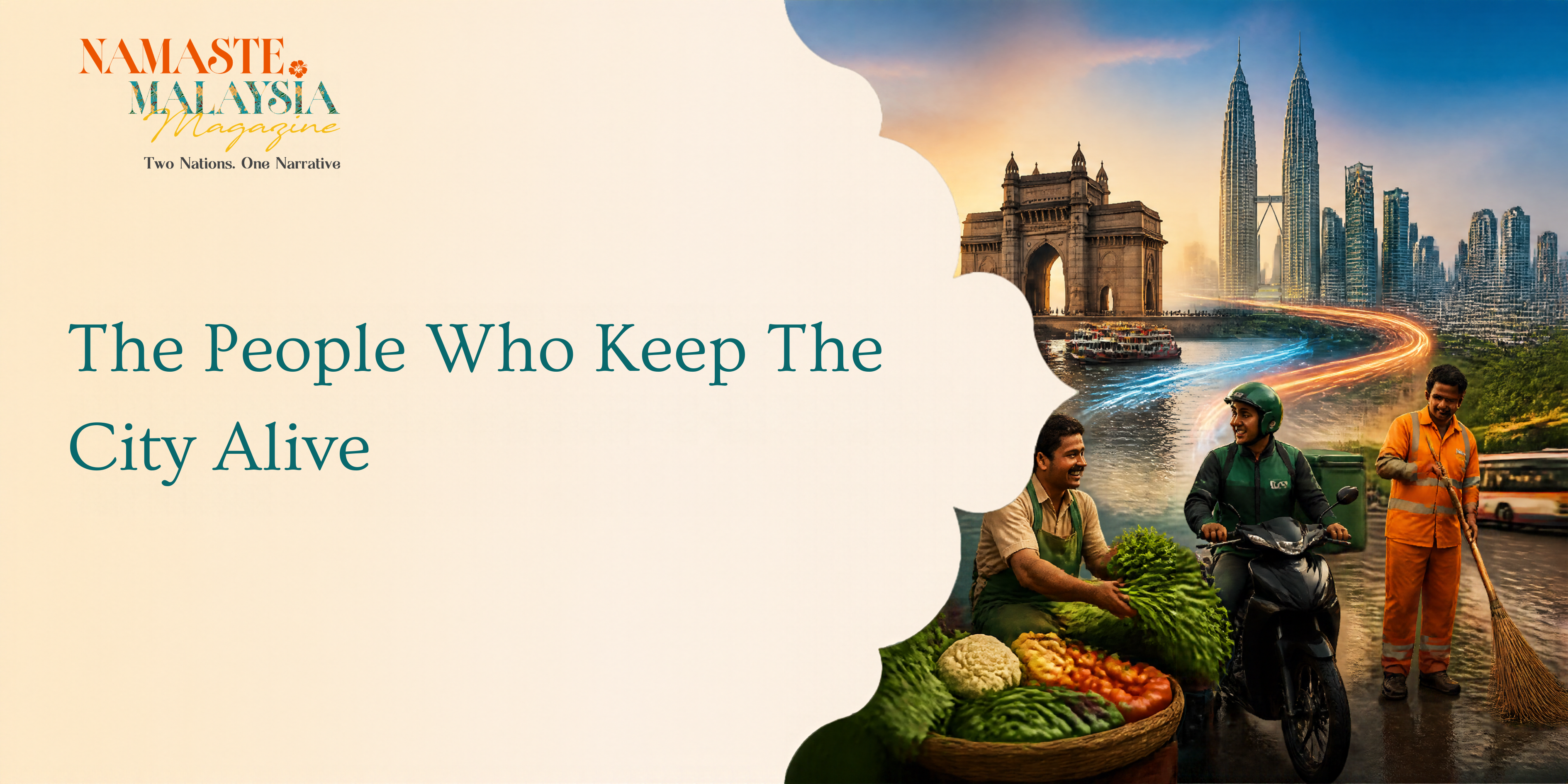
Behind every great city are thousands of people whose stories rarely make the headlines.
It is 4.00 am. The city is still asleep. But someone, somewhere, is already at work.
In Mumbai, a vegetable seller is arranging fresh produce before the first customers arrive.
In Kuala Lumpur, a market trader is unloading crates of vegetables.
A cleaner is sweeping yesterday's footsteps from the streets. A baker is preparing the first batch of bread. A food vendor is lighting the stove, getting ready for the morning crowd.
The skyscrapers are quiet. The shopping malls are dark. The traffic has yet to build.
But the city is already moving.
And the people making it happen are rarely the ones we notice.
The city behind the city
We celebrate cities for their impressive skylines, iconic landmarks, shopping destinations and vibrant economies.
Mumbai has its extraordinary energy, where millions navigate a city that never quite seems to stop. Kuala Lumpur has its striking skyline, bustling markets and multicultural neighbourhoods. Both cities are constantly evolving, attracting businesses, visitors and people chasing new opportunities.
Yet beneath the glamour lies another story.
It is the story of the people who wake up before the rest of us, work through the heat and rain, and keep essential services running.
The street sweeper who makes our morning walk pleasant. The security guard who watches over our buildings while we sleep. The delivery rider who brings our meals when we are too busy to cook. The public transport worker who helps thousands reach work on time.
They may not appear in glossy travel brochures or corporate annual reports, but their contribution is woven into the daily life of the city.
The hands that feed us
Walk through a Malaysian pasar pagi (morning market) or an Indian sabzi mandi (vegetable market), and you will discover a world that begins long before breakfast.
Vendors arrive in the early hours, often after travelling considerable distances. Produce is sorted, prices are negotiated, stalls are arranged and customers begin arriving.
There is a rhythm to these markets that no shopping app can quite replicate.
The familiar greeting, the friendly bargaining, the vendor who remembers what a regular customer usually buys. These are not simply transactions. They are relationships built over time.
In Malaysia, the neighbourhood market remains an important part of everyday life. In India, traditional markets continue to serve communities on a remarkable scale.
Behind every basket of vegetables, every bunch of flowers and every prepared meal is someone whose working day began while most of us were still dreaming.
The people who keep us moving
As the morning rush begins, another army of workers takes over.
Bus drivers, train operators, station attendants, traffic police officers, mechanics, taxi drivers and delivery riders become part of the city's daily choreography.
In Mumbai, the local train network carries enormous numbers of commuters, making it central to the city's daily rhythm.
In Kuala Lumpur, the MRT, LRT, buses and road networks connect people to workplaces, schools and homes.
We may complain when a train is delayed or traffic refuses to move. We may become impatient when a delivery takes longer than expected.
But how often do we consider the people working behind these services?
The driver navigating difficult roads. The technician responding to a breakdown. The station attendant helping a confused passenger. The rider making one more delivery despite the weather.
Their work is not always easy, predictable or appreciated.
Yet without them, the city would come to a standstill.
When the city sleeps, they are still working
By evening, offices begin emptying and restaurants fill up.
For many, the working day is finally over.
For others, it is only beginning.
Restaurant staff prepare for the dinner crowd. Hospital workers begin another shift. Cleaners maintain public spaces. Security personnel take their positions. Night-market traders set up their stalls. Food vendors serve customers who are looking for a late-night meal.
In both India and Malaysia, the night economy has its own energy and its own workforce.
Behind every glowing restaurant sign, clean public space and welcoming hotel lobby are people putting in hours that many of us never see.
And while the rest of the city enjoys its evening, they are making sure everything continues to function.
More than a paycheque
It is easy to describe these occupations in terms of services, wages and economic contribution. But behind every job is a human story.
A parent working long hours to support a child's education. A young person saving to start a business. A migrant who has travelled far from home to provide for family. A small trader hoping that today's sales will be better than yesterday's.
Their ambitions may be different, but many share the same hopes: security, dignity, opportunity and a better future for the people they love.
We do not need to romanticise hard work or pretend that every working condition is fair. Many of these workers face long hours, uncertain incomes, physical demands and limited protection.
Appreciation must go beyond a smile or a thank-you. It must also mean fair treatment, safe working conditions, respect and opportunities to progress.
A city is only as strong as the people who make it work.
The next time you walk past...
The next time you buy breakfast, perhaps look at the person who prepared it.
The next time you enter a spotless building, remember the person who cleaned it.
The next time your parcel arrives, think about the person who navigated traffic to bring it to you.
And the next time you admire a beautiful city, remember that its greatest asset may not be its tallest building, its most expensive development or its most famous attraction.
It may be the people whose names you will never know.
Because cities are not built by concrete and steel alone. They are built every day by ordinary people doing extraordinary things, often without applause.
Perhaps the true measure of a city is not how tall its buildings stand, but how much it values the people who keep it standing.
And that is a story worth telling!
Let's talk about it
Note: Who is one person in your everyday life whose work you have come to appreciate, but perhaps never thanked?
It could be your neighbourhood food vendor, security guard, cleaner, delivery rider or the person who opens the shop every morning.
Let's give these everyday heroes the recognition they deserve.
Namaste Malaysia Magazine — celebrating the people who keep the city alive and the possibilities that move us forward!