
We Speak Different Languages. We Eat Different Food. So Why Does Malaysia Feel So Familiar to India? 18-09-2026
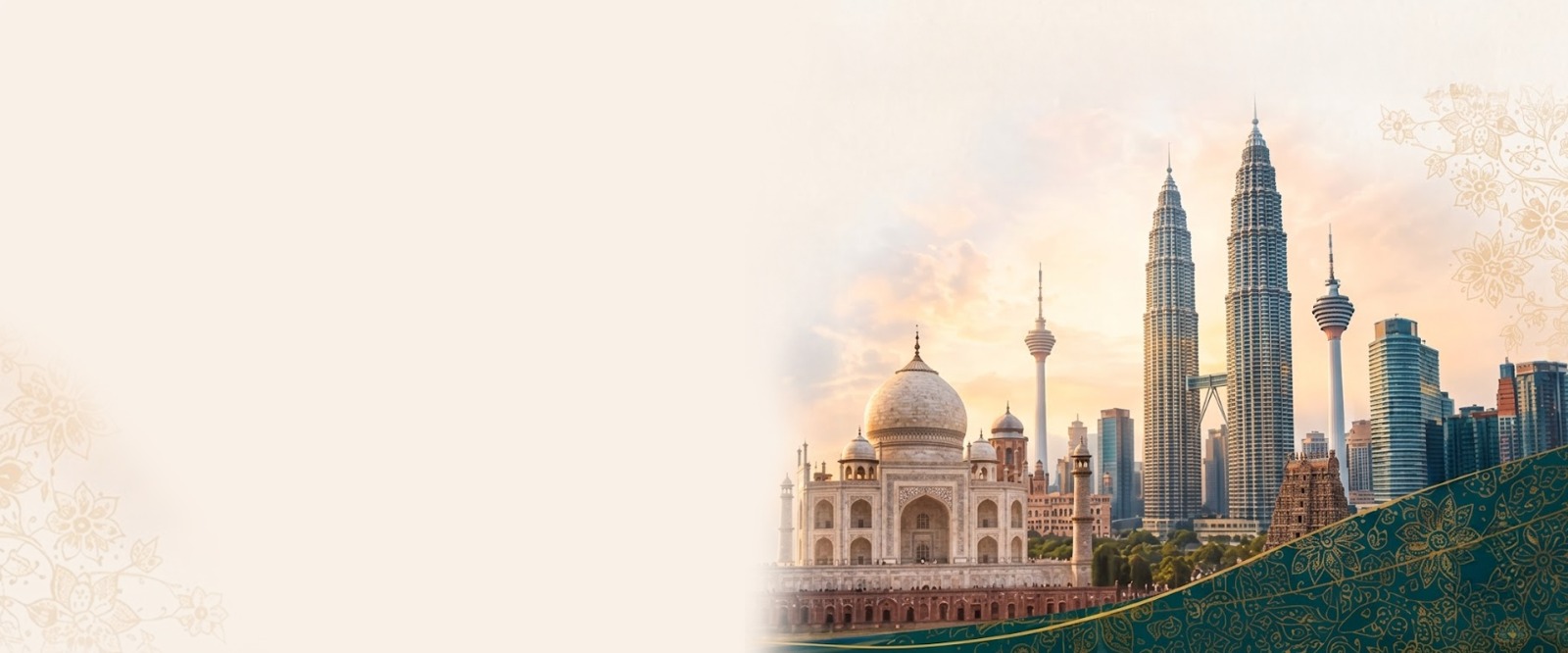
We Speak Different Languages. We Eat Different Food. So Why Does Malaysia Feel So Familiar to India?
The surprising stories that connect two countries separated by geography but joined by people, food and culture.
There is a curious little moment that happens to many Indians when they first arrive in Malaysia.
- It may happen at a mamak stall at 11 pm.
- You order a roti canai.
- The waiter asks, “Teh tarik?”
- You nod.
- Someone at the next table is speaking in Hindi.
- The television is showing a cricket match.
And suddenly, thousands of kilometres from India, you have that strange feeling:
“I've been here before.”
- Of course, you haven't.
- Not exactly.
- Malaysia isn't India.
- India certainly isn't Malaysia.
But somewhere between the food, the languages, the festivals, the family gatherings, the entrepreneurial spirit and generations of people moving between these shores, something extraordinary has happened.
- Two countries have developed a familiarity that is difficult to explain in a diplomatic document.
- You can, however, taste it.
- You can hear it.
And sometimes, you can laugh about it.
It began long before the modern relationship
Long before hashtags such as #IndiaMalaysia and #StrongerTogether existed, people were already travelling between India and Southeast Asia.
India and Malaysia formally established diplomatic relations in 1957, but the human connections between the two regions are centuries older.
And perhaps that is why the relationship today feels less like two strangers shaking hands and more like two families discovering that they have been neighbours for a very long time.
The Roti Canai Test
Here is perhaps the simplest test of the India–Malaysia connection.
Put a Malaysian in front of a plate of roti canai. Put an Indian in front of the same plate. Then start a conversation Within five minutes, someone will probably say: “This is like our parotta. And the Malaysian will probably reply: “Yes… but this is Malaysian.” And therein lies the beauty. Because both are right. Food travels. But it doesn't simply copy itself. It adapts. It picks up new flavours, new habits, new ingredients and new memories. The result is something that belongs to more than one culture. Roti canai is Malaysian. Its story, however, carries echoes of the Indian subcontinent. And perhaps that is the perfect metaphor for the relationship between the two countries.
We don't have to be identical to belong together.
The Mamak at 2 a.m.
Ask almost any Malaysian Indian, Malaysian Malay or Malaysian Chinese about a mamak stall and you will get a story.
Someone's first date.
And, occasionally, a place where you go because you are hungry and somehow leave having discussed politics, relationships, football and the economy.
A Temple Bell, a Deepavali Light… and a Neighbourhood Full of Colours
They become shared experiences.
- Merchants sailed across the seas.
- Goods were exchanged.
- Ideas travelled.
- Cultures met.
- Communities grew.
- A university assignment that somehow became a three-hour conversation.
- A football match watched at 2 a.m.
- A family gathering.
- A post-party supper.
- A place to solve life's biggest problems over tehtarik.
- The mamak is more than a place to eat.
- It is one of Malaysia's great social institutions.
- It is the same in India, where stall are open till the wee hours of the morning and the streets are bustling with people!
- It is also a beautiful example of how Indian heritage has become woven into the Malaysian way of life.
- And perhaps this is one reason the Indian visitor feels so comfortable here.
- You don't need an invitation to sit down.
- Just pull up a chair. “Makan dulu.” (“Eat first”) The rest can wait.
- Walk through a Malaysian neighbourhood during Deepavali.
- The lights are up.
- The rangoli / kolam is being carefully prepared.
- The aroma of food is everywhere.
- Families are dressed in their finest clothes.
- And then something very Malaysian happens.
- Neighbours who may not celebrate Deepavali themselves drop by to wish their friends.
- They eat.
- They chat.
- They take photographs.
- They are invited in.
- This is perhaps one of Malaysia's quiet superpowers.
- Festivals don't always remain inside the boundaries of the communities that celebrate them.
- They spill over.
Each has its own traditions.
But somewhere along the way, Malaysians learnt another tradition:
If there is food, go!
And honestly, that may be one of the strongest foundations for multiculturalism ever invented.
“You Speak Hindi?”
And suddenly there is a conversation.
- Hari Raya / Eid
- Chinese New Year.
- Deepavali.
- Christmas.
- Thaipusam.
- Wesak.
- Sometimes the connection is even simpler.
- An Indian visitor walks into a shop.
- The shopkeeper hears the accent.
- “India?”
- “Yes.”
- “Which place?”
Names of cities become conversation starters.
*India may be where the story began.Malaysia is where many of those stories continued.*
There is another side to this relationship that deserves much more attention.
India's enormous technology and entrepreneurial ecosystem meets Malaysia's strategic location, multicultural population, strong regional connections and growing digital economy.
The possibilities are no longer limited to traditional trade.
Start-ups.
The bridge between India and Malaysia is becoming increasingly digital — but the people crossing it remain very human.
And then there is the Indian traveller
There is a wonderful moment when an Indian family arrives in Malaysia for the first time.
Within 24 hours, the family has discovered that Malaysia offers something particularly appealing to Indian travellers:
In 2025, more than 1.5 million Indian visitors travelled to Malaysia, while Tourism Malaysia is actively strengthening its engagement with the Indian market as part of Visit Malaysia 2026.
But perhaps the bigger opportunity is not simply to bring more tourists, it is to create more connections.
The Grandmother Who Never Called It “Cultural Diplomacy”
And nobody in that kitchen is thinking:
What happens next?
Because perhaps this isn't really a story about two countries
And sometimes those connections begin with something as simple as:
“Makan already?” (“Have you eaten?”)
So, why does Malaysia feel familiar to India?
The conversation begins here.
Namaste Malaysia!
- Mumbai.
- Chennai.
- Madurai.
- Coimbatore.
- Kuala Lumpur.
- Penang.
- Ipoh.
-
Johor.
- A language becomes a bridge.
- A shared dish becomes an icebreaker.
- A family connection becomes a story.
- And for many Malaysians of Indian heritage, India is not simply a country on a map.
- It is a grandmother's hometown.
- A cousin's wedding.
- A childhood holiday.
- A favourite movie.
- A language spoken at home.
- A recipe passed down through generations.
- Business.
- Over the years, Indians and Malaysians have built companies, careers and partnerships across borders.
- Students came to Malaysia to study.
- Professionals came to work.
- Entrepreneurs established businesses.
- Companies began looking beyond their own markets.
- And now a new generation is asking a very different question.
- Not: “Where do I belong?”
- But: “Where can I build?”
- That is a powerful shift.
- Technology.
- Education.
- Healthcare.
- Tourism.
- Professional services.
- Manufacturing.
- Creative industries.
- Social entrepreneurship.
- Someone has already planned the itinerary down to the last minute.
- Someone else has announced
- “We must go shopping.”
- Another person wants food.
- Someone wants photographs.
- The children want the theme parks.
- And Dad wants to know whether there is parking.
- Familiarity without sameness.
- You can find food you recognise.
- Hear languages that sound familiar.
- Celebrate festivals that feel familiar.
- And yet you are still somewhere distinctly Malaysian.
- That balance is powerful.
- And it helps explain why Malaysia continues to attract Indian visitors.
- Imagine an Indian grandmother living in Malaysia.
- She makes her daughter's favourite curry using a recipe her own mother taught her.
- The recipe came from India.
- The ingredients are bought in Malaysia.
- The grandchildren speak a mixture of languages.
- The family celebrates Deepavali.
- The neighbours bring over food.
- The grandchildren grow up watching Indian films and Malaysian movies.
- “Today, we are strengthening bilateral relations.”
- They're just having dinner.
- Yet that is precisely what cultural connection looks like.
- It isn't always a conference.
- It isn't always a trade agreement.
- Sometimes it is a recipe.
- Sometimes it is a song.
- Sometimes it is a wedding.
- Sometimes it is a child growing up comfortably with two cultures.
- Sometimes it is simply a Malaysian saying:“Selamat Datang” (“Welcome.”)
- The first chapter of the India–Malaysia story was about migration, trade and community.
- The next chapter could be about collaboration.
- Young entrepreneurs working across borders.
- Women building businesses.
- Students moving between universities.
- Technology companies partnering.
- Artists collaborating.
- Travellers discovering new places.
- Social entrepreneurs solving community problems together.
- Professionals sharing knowledge.
- And a new generation that is much less interested in asking:
- “Are you Indian or Malaysian?”
- They are more interested in asking:
- “What can we create together?”
- That is where the story becomes exciting.
- Perhaps it is a story about people.
- The Indian who built a life in Malaysia.
- The Malaysian who fell in love with India.
- The entrepreneur who has a business in both countries.
- The student who discovered a career across the sea.
- The mother who passed down a recipe.
- The young woman building a company.
- The chef who turned an old recipe into something new.
- The family that has travelled between both countries for generations.
- These are the stories that make relationships real.
- Governments may sign agreements.
- Businesses may sign contracts.
- But people create connections.
- Maybe it is the food.
- Maybe it is the language.
- Maybe it is the festivals.
- Maybe it is the warmth.
- Maybe it is the generations of shared history.
- Or maybe it is because cultures, like people, have a remarkable ability to recognise something familiar in one another.
- India and Malaysia are different.
- And that is exactly why the relationship is interesting.
- Because the future isn't about making the two countries the same.
- It is about discovering what becomes possible because they are different.
- Different shores.
- Shared stories.
- One increasingly connected future.